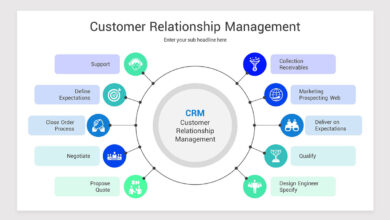
In today’s fast-paced digital world, a cloud based saas crm solution is no longer a luxury—it’s a necessity. Discover how this powerful tool transforms customer relationships, boosts sales, and drives business growth with unmatched efficiency and scalability.
What Is a Cloud Based SaaS CRM Solution?

A cloud based saas crm solution is a customer relationship management system hosted on remote servers and delivered via the internet as a subscription service. Unlike traditional on-premise CRM software, it eliminates the need for physical hardware, complex installations, and high upfront costs. Instead, businesses access the platform through a web browser, enabling real-time collaboration and data synchronization across teams and locations.



Definition and Core Components
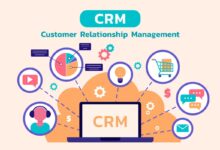
At its core, a cloud based saas crm solution integrates sales, marketing, and customer service functions into a unified digital environment. Key components include contact management, lead tracking, sales pipeline visualization, email integration, automation workflows, analytics dashboards, and mobile accessibility. These features are maintained and updated by the service provider, ensuring users always have access to the latest tools and security patches.
- Contact and account management
- Sales force automation
- Marketing campaign tracking
- Customer support ticketing systems
The modular nature of most platforms allows businesses to customize their CRM experience based on industry needs, team size, and operational complexity.
How It Differs From On-Premise CRM
Traditional on-premise CRM systems require companies to purchase licenses, install software on local servers, and manage ongoing maintenance. This model demands significant capital investment, dedicated IT staff, and longer deployment times. In contrast, a cloud based saas crm solution operates on a pay-as-you-go model, drastically reducing entry barriers for small and medium-sized enterprises (SMEs).
According to Gartner, over 80% of CRM deployments in 2023 were cloud-based, signaling a definitive shift away from legacy systems. The agility, scalability, and lower total cost of ownership make cloud CRM the preferred choice for modern organizations.
“The future of CRM lies in the cloud—flexible, intelligent, and always evolving.” — Gartner Research, 2023
Top 7 Benefits of a Cloud Based SaaS CRM Solution
Adopting a cloud based saas crm solution brings transformative advantages that directly impact revenue, customer satisfaction, and operational efficiency. Below are seven compelling reasons why businesses are making the switch.
1. Scalability and Flexibility
One of the most powerful benefits of a cloud based saas crm solution is its ability to scale seamlessly with your business. Whether you’re adding new users, expanding into new markets, or integrating additional tools, cloud CRM platforms adapt without requiring hardware upgrades or system overhauls.
For example, startups can begin with basic plans and gradually upgrade as they grow. Enterprise-level organizations can deploy multi-territory configurations with role-based access and regional data compliance settings. This elasticity ensures that the CRM grows with the company, avoiding costly migrations or system replacements down the line.
- Instant user provisioning
- Modular feature add-ons
- Global deployment capabilities
Platforms like Salesforce and Zoho CRM offer tiered pricing and customizable modules, making scalability a built-in advantage.
2. Cost Efficiency and Predictable Pricing
Unlike traditional CRM systems that involve large upfront investments in software licenses, servers, and IT infrastructure, a cloud based saas crm solution follows a subscription-based pricing model. This transforms capital expenditure (CapEx) into operational expenditure (OpEx), improving cash flow and budget predictability.
Most providers charge per user per month, allowing businesses to align costs directly with usage. Additional savings come from reduced need for in-house IT support, server maintenance, and software updates—all handled by the vendor.
- No hardware purchase required
- Lower IT staffing needs
- Automatic software updates included
A study by Nucleus Research found that cloud CRM delivers an average ROI of $8.71 for every dollar spent—significantly higher than on-premise alternatives.
3. Real-Time Data Access and Collaboration
With a cloud based saas crm solution, all customer data is stored centrally and updated in real time. Sales reps, marketers, and support agents can access the same information regardless of location or device. This eliminates data silos and ensures everyone works with accurate, up-to-date insights.
For instance, when a sales representative logs a call, the activity instantly appears in the customer’s profile, visible to the entire team. Marketing can then use this data to personalize follow-up campaigns, while customer service can reference recent interactions to provide faster resolutions.
- Multi-device synchronization (desktop, mobile, tablet)
- Live dashboard updates
- Team collaboration tools (chats, notes, task assignments)
This level of transparency fosters better coordination, reduces duplication of effort, and enhances the overall customer experience.
4. Rapid Deployment and Easy Integration
Deploying a cloud based saas crm solution typically takes days or weeks—not months. Most platforms offer guided setup wizards, pre-built templates, and onboarding support to get teams up and running quickly.
Moreover, these systems are designed to integrate effortlessly with other business tools such as email clients (Gmail, Outlook), productivity suites (Google Workspace, Microsoft 365), e-commerce platforms (Shopify, Magento), and marketing automation tools (HubSpot, Mailchimp).
- API-first architecture for custom integrations
- Zapier and Make (Integromat) compatibility
- Pre-built connectors for popular apps
For example, integrating your CRM with your email platform enables automatic logging of sent and received messages, enriching customer profiles without manual input.
5. Enhanced Security and Data Compliance
Contrary to common misconceptions, cloud based saas crm solution providers often offer superior security compared to on-premise systems. Leading vendors invest heavily in encryption, multi-factor authentication, intrusion detection, and regular security audits.
Data is stored in geographically distributed data centers with redundant backups, ensuring high availability and disaster recovery. Providers like Salesforce and Microsoft Dynamics comply with global standards such as GDPR, HIPAA, SOC 2, and ISO 27001, giving businesses confidence in data protection.
- End-to-end data encryption (in transit and at rest)
- Regular penetration testing
- Compliance certifications for international regulations
Additionally, role-based access controls allow administrators to define precisely who can view or edit sensitive information, minimizing internal risks.
6. Built-In Automation and AI Capabilities
Modern cloud based saas crm solution platforms leverage artificial intelligence (AI) and machine learning to automate repetitive tasks and deliver intelligent insights. Features like lead scoring, email automation, chatbots, and predictive analytics help teams work smarter, not harder.
For example, AI-powered assistants can suggest the best time to contact a lead, recommend next steps based on past behavior, or even draft personalized email responses. Automation rules can trigger follow-up tasks, assign leads to sales reps, or send birthday greetings—all without human intervention.
- Automated workflow triggers
- Predictive lead scoring
- Natural language processing for sentiment analysis
According to a report by MarketsandMarkets, the global CRM market is expected to grow from $54.9 billion in 2022 to $104.9 billion by 2027, driven largely by AI and automation adoption.
7. Mobile Accessibility and Remote Work Enablement
In an era where remote and hybrid work models dominate, mobile access to CRM data is essential. A cloud based saas crm solution offers native mobile apps that replicate desktop functionality, allowing sales teams to update records, schedule meetings, and access customer histories from anywhere.
Field sales representatives can log activities after client visits, upload photos of signed contracts, or check inventory levels—all in real time. Managers can monitor team performance through mobile dashboards and provide instant feedback.
- Offline mode with sync-on-connect
- GPS-enabled visit tracking
- Voice-to-text note entry
This mobility empowers distributed teams, improves responsiveness, and ensures continuity of operations regardless of physical location.
Key Features to Look for in a Cloud Based SaaS CRM Solution
Not all cloud based saas crm solution platforms are created equal. To maximize value, businesses should evaluate solutions based on specific functional and technical criteria. The following features are critical for long-term success.
Customization and Workflow Automation
A robust CRM should allow extensive customization to match your business processes. This includes custom fields, pipelines, stages, and automation rules. For example, you might want to create a unique sales process for enterprise clients versus small business leads.
Workflow automation reduces manual data entry and ensures consistency. You can set up triggers such as: ‘When a lead is marked as “Qualified,” assign it to the nearest sales rep and send a welcome email.’ These automations save time and reduce human error.
- Drag-and-drop workflow builder
- Conditional logic for branching actions
- Approval workflows for deal closures
Platforms like Pipedrive and Freshsales excel in intuitive automation design, making them ideal for sales-focused organizations.
Advanced Reporting and Analytics
Data-driven decision-making starts with comprehensive reporting. A top-tier cloud based saas crm solution provides customizable dashboards, real-time KPI tracking, and drill-down capabilities. Common reports include sales forecasts, conversion rates, customer lifetime value (CLV), and campaign ROI.
Advanced analytics go beyond basic charts by offering trend analysis, anomaly detection, and benchmarking against historical data. Some systems even use AI to generate insights, such as identifying which factors contribute most to deal closures.
- Interactive dashboards with drag-and-drop widgets
- Exportable reports in PDF, Excel, or CSV
- Role-specific views (executive, manager, rep)
Integration with BI tools like Tableau or Power BI further enhances analytical depth for enterprise users.
Third-Party Integrations and API Access
No CRM operates in isolation. The ability to connect with other business systems is crucial. Look for platforms that offer native integrations with email, calendars, telephony, e-commerce, ERP, and marketing tools.
For custom needs, a well-documented REST API allows developers to build bespoke connections. Webhooks enable real-time data synchronization between systems, ensuring consistency across platforms.
- Pre-built integrations with popular tools
- Open API for custom development
- Support for middleware platforms like Zapier
For example, syncing your CRM with your accounting software (e.g., QuickBooks) ensures that closed deals automatically generate invoices, streamlining the order-to-cash cycle.
How to Choose the Right Cloud Based SaaS CRM Solution for Your Business
Selecting the right cloud based saas crm solution requires careful evaluation of your business goals, team size, industry, and budget. A one-size-fits-all approach rarely works. Follow this structured methodology to make an informed decision.
Assess Your Business Needs and Objectives
Start by defining what you want to achieve with your CRM. Are you looking to improve lead conversion? Enhance customer retention? Streamline cross-departmental collaboration? Your objectives will determine which features are most important.
For example, a B2B company may prioritize lead scoring and pipeline management, while a service-based business might focus on case tracking and SLA monitoring. Conduct stakeholder interviews across sales, marketing, and customer service to gather requirements.
- Identify pain points in current processes
- List must-have vs. nice-to-have features
- Define success metrics (e.g., 20% increase in lead response time)
This foundational step ensures that your CRM selection aligns with strategic business outcomes.
Evaluate Vendor Reputation and Support
The reliability of your cloud based saas crm solution depends heavily on the vendor’s track record. Research customer reviews on platforms like G2, Capterra, and TrustRadius. Pay attention to feedback on uptime, customer support responsiveness, and ease of use.
Also, assess the level of support offered: Do they provide 24/7 assistance? Is there a knowledge base, video tutorials, or live training? Strong onboarding and ongoing support reduce implementation friction and increase user adoption.
- Check SLA (Service Level Agreement) guarantees
- Review case studies in your industry
- Test responsiveness during free trial
Vendors like HubSpot and Zoho are known for exceptional customer support and extensive educational resources.
Consider Total Cost of Ownership (TCO)
While subscription fees are transparent, hidden costs can accumulate. Consider expenses related to training, data migration, custom development, add-on modules, and third-party integrations.
For example, a seemingly affordable per-user plan may require premium add-ons for advanced reporting or telephony integration. Always request a detailed quote and ask about long-term pricing changes.
- Factor in implementation and training costs
- Estimate future scaling expenses
- Negotiate annual contracts for discounts
A thorough TCO analysis prevents budget overruns and ensures sustainable ROI.
Implementation Best Practices for Cloud Based SaaS CRM Solutions
Even the best cloud based saas crm solution will underperform without proper implementation. Follow these best practices to ensure a smooth rollout and high user adoption.
Plan and Prepare Before Launch
Begin with a clear project plan that outlines timelines, responsibilities, data migration strategy, and training schedules. Appoint a CRM champion or project manager to oversee the process.
Data quality is critical—cleanse duplicate records, standardize formats (e.g., phone numbers, addresses), and map legacy data fields to the new system. Poor data hygiene can undermine trust in the CRM from day one.
- Create a data migration checklist
- Define user roles and permissions
- Set up test environments for validation
Running a pilot with a small team before full deployment helps identify issues early.
Train Users and Drive Adoption
User resistance is a common reason for CRM failure. Combat this with comprehensive, role-specific training. Sales reps need different guidance than customer service agents.
Offer multiple training formats: live webinars, video tutorials, quick-reference guides, and hands-on workshops. Reinforce learning with gamification—reward users for logging activities, updating deals, or completing onboarding modules.
- Provide ongoing refresher sessions
- Encourage peer mentoring
- Track login and usage metrics
According to Salesforce, companies with strong user adoption see up to 4.5x higher ROI from their CRM investment.
Monitor Performance and Optimize Continuously
After launch, continuously monitor key performance indicators (KPIs) such as data completeness, activity logging rates, conversion funnel progression, and user engagement.
Use feedback loops to identify bottlenecks. For example, if sales reps aren’t updating deal stages, investigate whether the process is too cumbersome or if training was insufficient.
- Schedule quarterly CRM health checks
- Collect user feedback via surveys
- Iterate on workflows and dashboards
Treat your CRM as a living system—regular optimization ensures it evolves with your business.
Top Cloud Based SaaS CRM Solutions in 2024
The market is flooded with cloud based saas crm solution options. Here’s a curated list of the top platforms based on functionality, ease of use, scalability, and customer satisfaction.
Salesforce Sales Cloud
Salesforce remains the global leader in CRM, powering over 150,000 companies worldwide. Its Sales Cloud offers a comprehensive suite of tools for lead management, opportunity tracking, forecasting, and collaboration.
Strengths include unmatched customization, a vast AppExchange ecosystem with thousands of integrations, and AI-powered Einstein Analytics. However, it can be complex and costly for small businesses.
- Ideal for: Mid to large enterprises
- Pricing: Starts at $25/user/month
- Best for: Scalability and advanced automation
Learn more at Salesforce Sales Cloud.
HubSpot CRM
HubSpot offers a freemium cloud based saas crm solution that’s perfect for startups and growing businesses. The free version includes contact management, email tracking, deal pipelines, and meeting scheduling.
Its strength lies in seamless integration with marketing, sales, and service hubs, creating a unified customer experience. The interface is intuitive, and onboarding is fast.
- Ideal for: SMEs and marketing-driven organizations
- Pricing: Free core CRM; paid tiers from $50/month
- Best for: Inbound marketing and ease of use
Explore it at HubSpot CRM.
Zoho CRM
Zoho CRM delivers exceptional value with a rich feature set at competitive prices. It includes AI-powered assistant Zia, sales signals, workflow automation, and multichannel communication.
Highly customizable and available in multiple editions, Zoho caters to businesses of all sizes. Its mobile app is among the best in the industry.
- Ideal for: Small to mid-sized businesses
- Pricing: Starts at $14/user/month
- Best for: Cost-effective scalability
Visit Zoho CRM for details.
Future Trends in Cloud Based SaaS CRM Solutions
The evolution of cloud based saas crm solution platforms is accelerating, driven by AI, automation, and changing customer expectations. Staying ahead of these trends ensures long-term competitiveness.
AI-Powered Predictive Analytics
Future CRMs will increasingly use AI to predict customer behavior, recommend actions, and forecast sales with high accuracy. For example, systems will anticipate churn risk and suggest retention strategies before customers disengage.
Machine learning models will analyze historical data to identify patterns, such as which leads are most likely to convert or which products pair well together.
- Automated next-best-action suggestions
- Churn prediction scores
- Dynamic pricing recommendations
These capabilities turn CRM from a reactive tool into a proactive growth engine.
Hyper-Personalization and Customer Journey Mapping
Customers expect personalized experiences at every touchpoint. Next-gen cloud based saas crm solution platforms will offer advanced journey mapping, tracking interactions across email, social media, chat, and phone.
By unifying these touchpoints, CRM systems can deliver tailored content, offers, and support based on individual preferences and behavior.
- Real-time personalization engines
- Behavior-triggered messaging
- Unified customer profiles with 360-degree views
This level of personalization boosts engagement, loyalty, and lifetime value.
Integration With Emerging Technologies
CRM platforms are integrating with cutting-edge technologies like voice assistants, augmented reality (AR), and the Internet of Things (IoT). For example, IoT sensors in equipment can automatically create service tickets in the CRM when maintenance is needed.
Voice-enabled CRM allows hands-free data entry, ideal for field technicians or drivers. AR can assist sales reps with virtual product demos during customer meetings.
- Voice-to-CRM command integration
- IoT data ingestion for predictive service
- Blockchain for secure customer identity verification
These innovations will redefine how businesses interact with customers and manage relationships.
What is a cloud based saas crm solution?
A cloud based saas crm solution is a web-hosted customer relationship management system delivered as a subscription service. It enables businesses to manage interactions with customers, automate sales processes, and analyze performance—all accessible via the internet without requiring on-site hardware.
What are the main benefits of using a cloud CRM?
Key benefits include lower upfront costs, scalability, real-time data access, automatic updates, enhanced security, mobile accessibility, and seamless integration with other business tools. These advantages lead to improved efficiency, better customer service, and higher sales conversion rates.
Is a cloud based saas crm solution secure?
Yes, reputable cloud based saas crm solution providers implement robust security measures such as data encryption, multi-factor authentication, regular audits, and compliance with international standards like GDPR and SOC 2. In many cases, cloud CRM is more secure than on-premise systems due to the provider’s dedicated security infrastructure.
How much does a cloud CRM cost?
Costs vary by provider and features, but most cloud CRM platforms charge on a per-user, per-month basis. Entry-level plans start as low as $10–$15 per user/month, while enterprise solutions can range from $100–$300+ per user/month. Many vendors offer free tiers with basic functionality.
Which industries benefit most from cloud CRM?
Cloud based saas crm solution platforms are valuable across industries, including retail, healthcare, financial services, real estate, education, and technology. Any business that relies on customer relationships—especially those with sales teams, marketing campaigns, or support operations—can benefit significantly.
Adopting a cloud based saas crm solution is a strategic move that empowers businesses to manage customer relationships more effectively, drive sales growth, and operate with greater agility. With benefits ranging from cost savings to AI-driven insights, these platforms are essential tools in the digital age. By choosing the right solution, implementing it wisely, and staying ahead of emerging trends, organizations can unlock long-term competitive advantage and deliver exceptional customer experiences.
Further Reading: